Aristicrats Art Pieces in the 1650 in the Caribbean
This past weekend, Mrs. Perez and I traveled to Puerto Rico for a little remainder and relaxation at one of our favorite places, Villa Cofresi in beautiful Rincón. I was able, however, to coerce Mrs. Perez to accompany me to a place I've wanted to visit for some time – the Museo de Arte de Ponce.
Now, if yous know me you know I've got a thing for fine art museums and whenever I travel abroad, I make sure to make fourth dimension for the local art museum. Whether it be the Metropolitan Museum of Art or the Brooklyn Museum in New York City, the Museo Nacional de Arte and Museo Soumaya in Mexico City, the National Museum of Fine art of Romania, the National Gallery of Bosnia and Herzegovina in Sarajevo, or the Norton Museum of Fine art right here in South Florida – if there's an art museum in boondocks, I'm at that place.
So, I was happy to have been able to visit the art museum in Ponce, which was founded in 1959 by Luis A. Ferré, a Puerto Rican engineer, industrialist, politico, philanthropist, and a patron of the arts. Born in the southern city of Ponce, Ferré was the tertiary Governor of the Commonwealth of Puerto Rico, serving from 1969 to 1973 and was the founding father of the New Progressive Party, which advocates for Puerto Rico to go a state of the U.s.a.. He is likewise a recipient of the Presidential Medal of Freedom (awarded by President George Due west. Bush in 1991), the highest civilian laurels of the United states.

The museum initially displayed 71 paintings from Ferré'south personal collection but today displays over iii,000 pieces including the iconic painting "Flaming June" (which he purchased at the Maas Gallery in London in 1963 for £2,000) past the Victorian painter Frederic Leighton (alas, that painting was temporarily in England during our visit). Ferré died in 2003 at 99 years old. He was survived by his married woman, Tiody de Jesús (pictured above); his son, Antonio; and his daughter, the novelist Rosario Ferré, writer of "The Firm on the Lagoon" (she passed away of natural causes in February 2016).
The museum was the recipient of a $30M expansion in 2010 making it the largest art museum in the Caribbean. The Financial Times of London states that the museum holds "ane of the almost distinguished private collections in the Western Hemisphere exterior the United states of america." Information technology has an important collection of art that ranges from the 14th to the 20th century, Italian Bizarre, British Pre-Raphaelite, Spanish Aureate Age and contemporary Latin-American art.
I brought along my Lumix GH4 and a few lenses and snapped a few pics of some of my favorite pieces. So if you lot happen to notice yourself in Puerto Rico and love art, put the Museo de Arte de Ponce on your list of places to visit (admission is only $6, $3 for students and seniors and free parking) – you won't exist sorry. Relish the photographs…
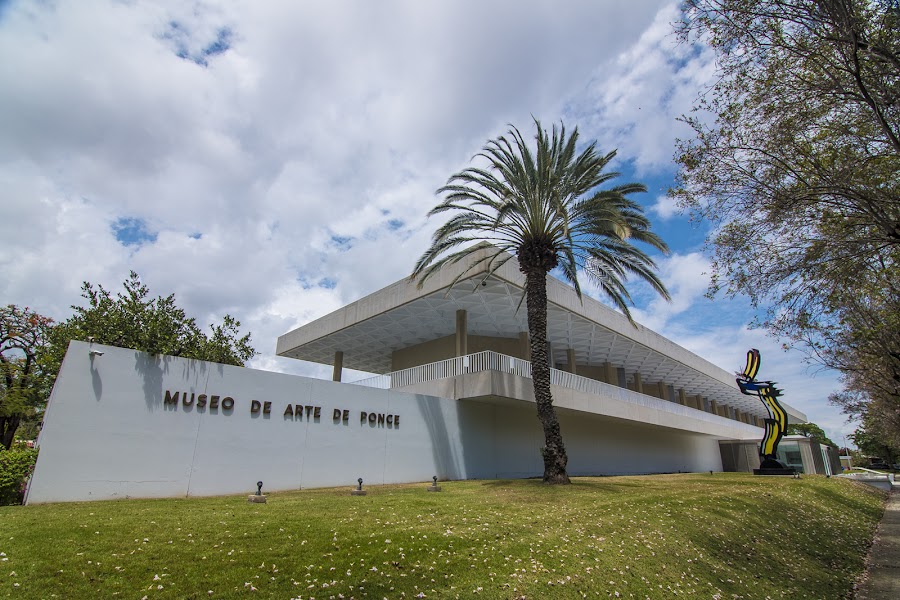
We make it at the museum (there are small-scale gratis parking garages on either side of the museum)


Once within, the museum boasts an elegant double staircase designed past American architect Edward Durell Stone…

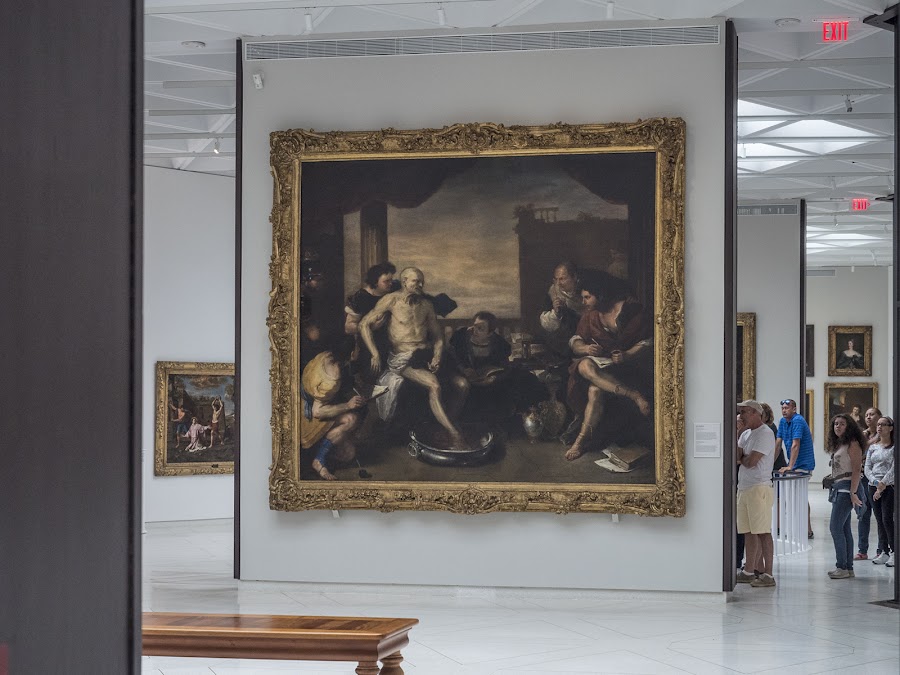
The museum offers daily guided tours in English language and Spanish at 11:00am and 2:00pm
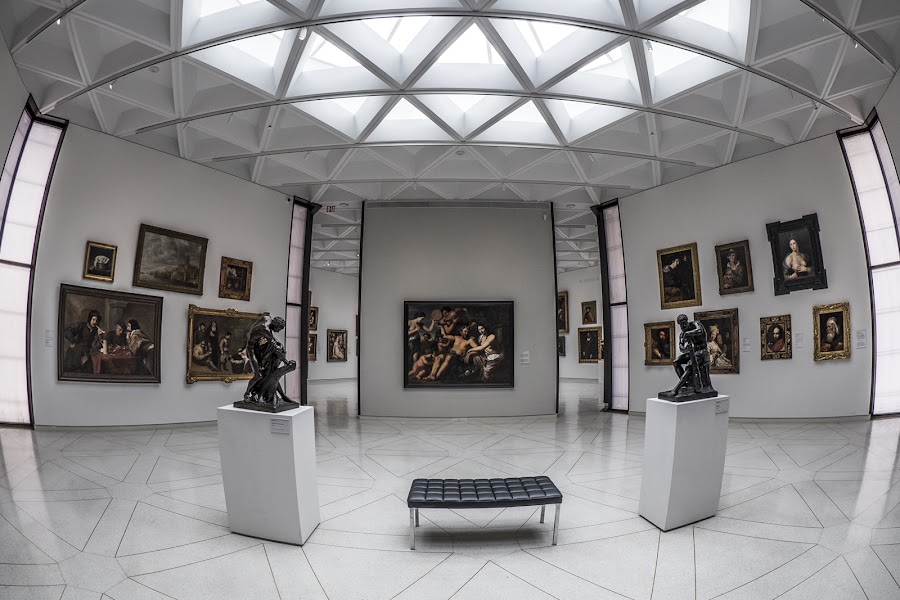

One of the main features of the museum is its hexagonal galleries, which permit natural light to enter through its corners bringing an illumination to exhibitions…

"Doubting Thomas" by Bernardo Strozzi (1581 – 1644), an Italian Baroque painter and engraver.
He is considered a principal founder of the Venetian Baroque mode…

Bronze sculpture of 'Hercules' by French sculptor Guillaume Boichot (1735-1814)


"The Fall of the Rebel Angels" by Italian painter Scipione Compagno (1624-1680). This might have been my favorite painting at the museum (would have also made a pretty badass heavy metal album cover!)

"Susanna and the Elders" by Dutch painter Lambert Sustris (c. 1515-1520 – c. 1584). The painting depicts the biblical story of Susanna (from the Book of Daniel), a fair Hebrew wife, who is accosted by two lustful elders while she was bathing solitary in her garden…

"Dolorosa" (Virgin of Sorrows) past Spanish sculptor José de Mora (1642–1724)

"San Antonio de Padua", a Portuguese Catholic priest and friar (who is also the patron saint of lost things!)
by Castilian sculptor Pedro de Mena y Medrano (1628 – 1688)

"The Torture of Ixion" by Italian painter Giovanni Battista Langetti (1625–1676). In Greco-Roman mythology, Ixion was a king of the Lapiths who tried to seduce Hera, the wife of Zeus. Equally a punishment, Ixion was bound to a fiery bike and condemned to spin for all eternity. Lesson learned? You don't mess with the big man's married woman!

"The Awakening of the Arts" by Flemish painter Frans Floris (1517-1570). Floris played an of import role in the motion in Northern Renaissance painting referred to as Romanism…

"Milo of Croton" by French sculptor Edme Dumont (1720-1775)

"Mary Magdalen" by French painter Trophime Bigot (1579–1650)

"The Wayfarers" by French realist painter Léon Augustin Lhermitte (1844-1925) whose primary subject affair was rural scenes depicting peasants at piece of work…

"Venus and her Satellites" by William Etty (1787-1849), the first significant British painter of nudes and still lifes…

A couple of art lovers snapping photos of French painter William-Adolphe Bouguereau'due south "Far from Abode" (1868)

"Female person Nude" by acclaimed Spanish painter Joaquín Sorolla y Bastida (1863-1923)

"La consulta" by Puerto Rican painter and muralist Jorge Rechany (1914-1990)

"Noche de luna llena" by Puerto Rican painter Carlos Cancio (1961 – )

We actually enjoyed our visit to the Museo de Arte de Ponce – it truly is a world-class art museum. Brand sure y'all make the time to finish past should you find yourself in Puerto Rico…


Source: https://southfloridafilmmaker.com/museo-de-arte-de-ponce/
Postar um comentário for "Aristicrats Art Pieces in the 1650 in the Caribbean"